Branded Retail & Teahouse
Art Center College of Design Fall 2025
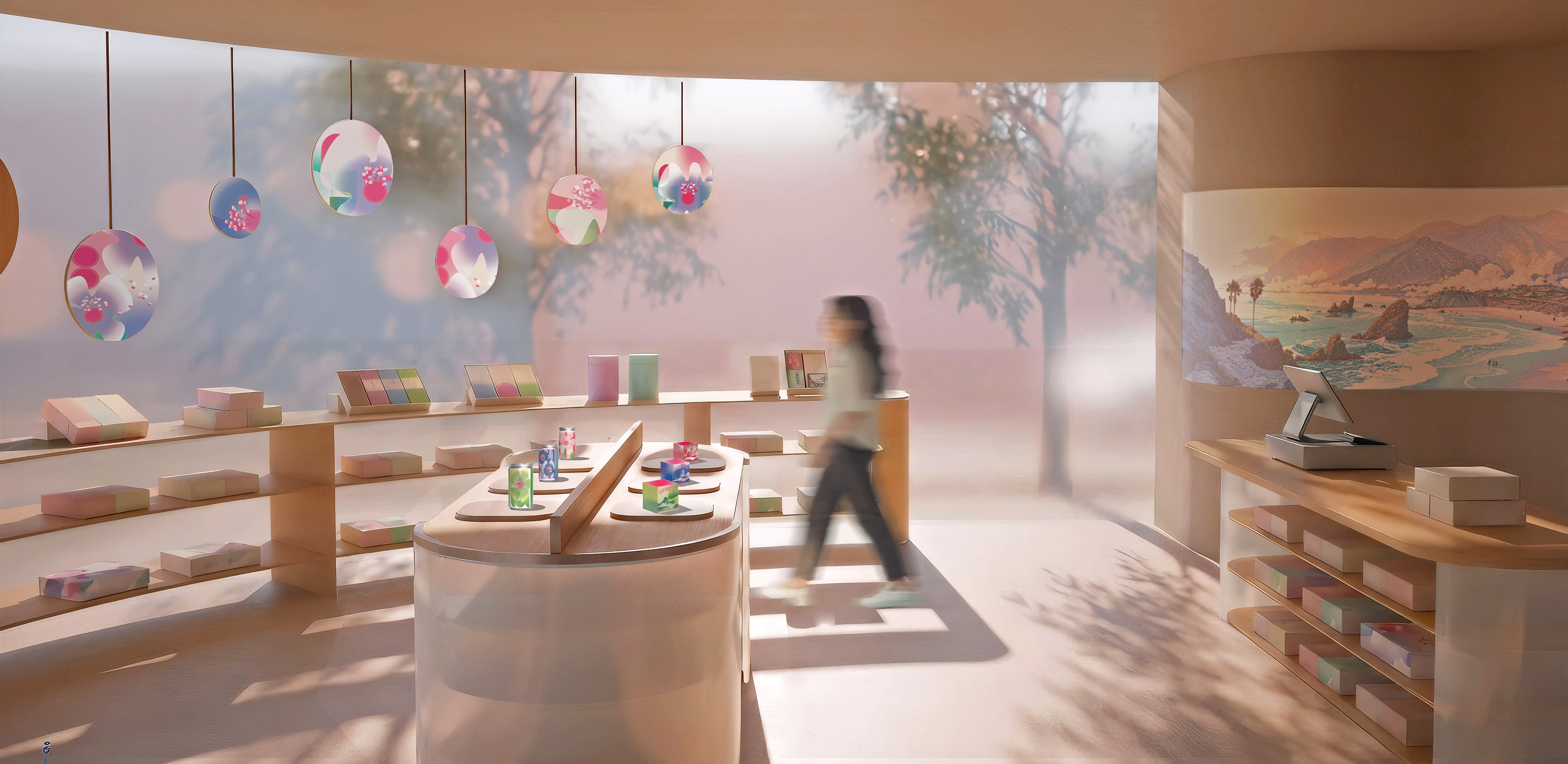
Retail zone — Toraya Teahouse LA.
A layered retail environment where Japanese confectionery tradition meets a contemporary Los Angeles sensibility, inviting slow discovery through light, material, and ritual.

Design Story
Toraya reimagines the Japanese tea ritual as a spatial experience rooted in softness and time. Inspired by the process of tea infusion — where color, aroma, and emotion gradually unfold — the space translates ritual into interior language through layered translucency, gentle light, and slow movement. Rather than emphasizing bold branding, the design invites visitors to pause, observe, and engage with tea as a quiet, multisensory experience that bridges tradition and contemporary life in Los Angeles.
Toraya — Brand Context & Reinterpretation
Toraya is a historic Japanese confectionery brand with over five centuries of craftsmanship, known for its wagashi that embody seasonality, restraint, and quiet precision. Rooted in tradition, Toraya’s brand values emphasize patience, ritual, and respect for natural materials—treating confectionery not simply as food, but as a cultural and sensory experience.
In this project, Toraya is reinterpreted through a contemporary Los Angeles lens, translating its philosophy of calm refinement into a spatial retail and teahouse experience. Rather than replicating a traditional Japanese interior, the design distills Toraya’s essence—subtlety, balance, and attentiveness—into light, materiality, and circulation. Soft translucency, layered thresholds, and controlled views create moments of pause and gradual reveal, mirroring the slow enjoyment of wagashi and tea.​​​​​​​
Space Planning
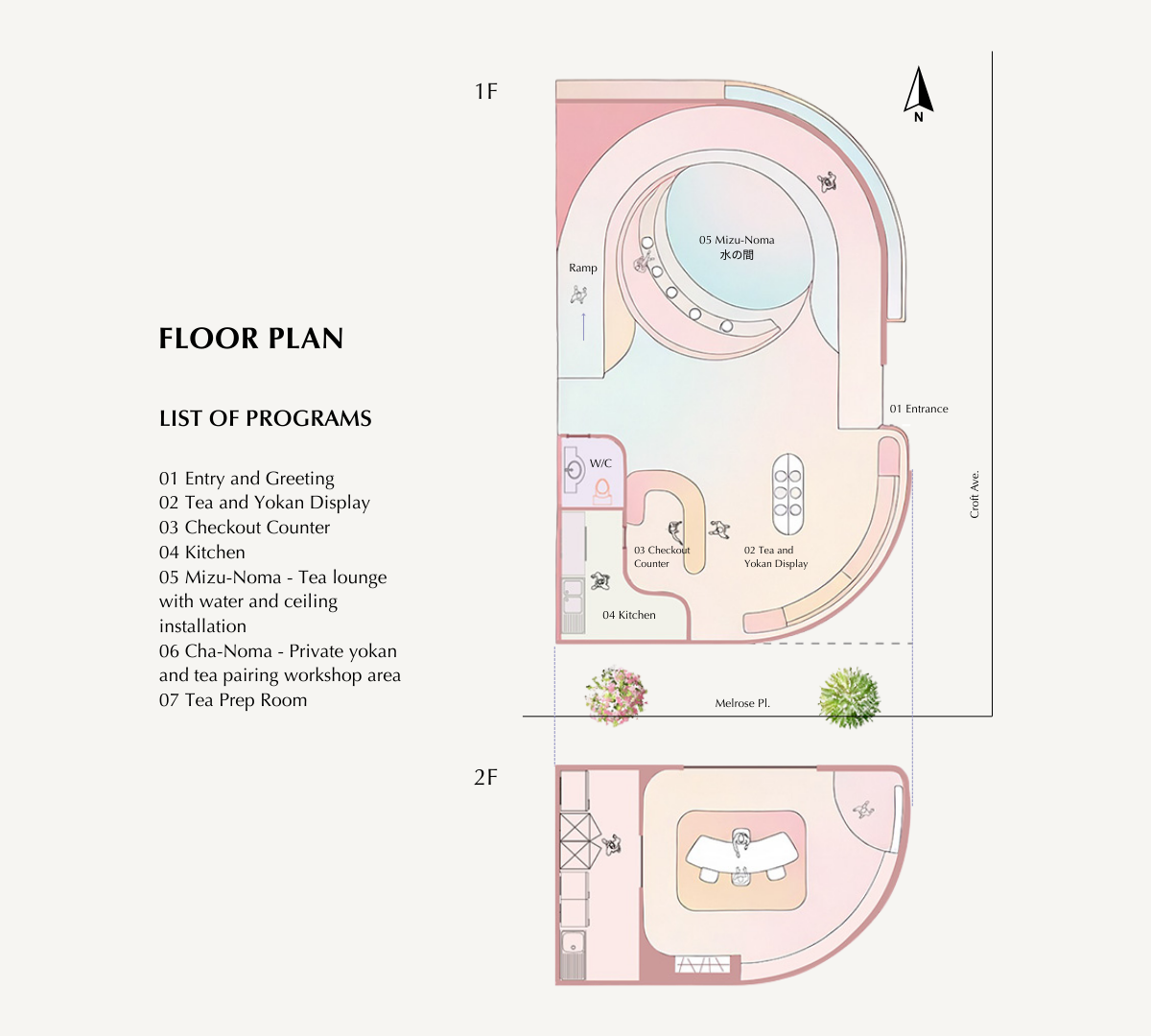
Floor plan and circulation strategy.
The plan organizes retail and teahouse programs through a slow, linear circulation that guides visitors from the street into increasingly intimate spaces, reinforcing Toraya’s ritual of arrival and pause.
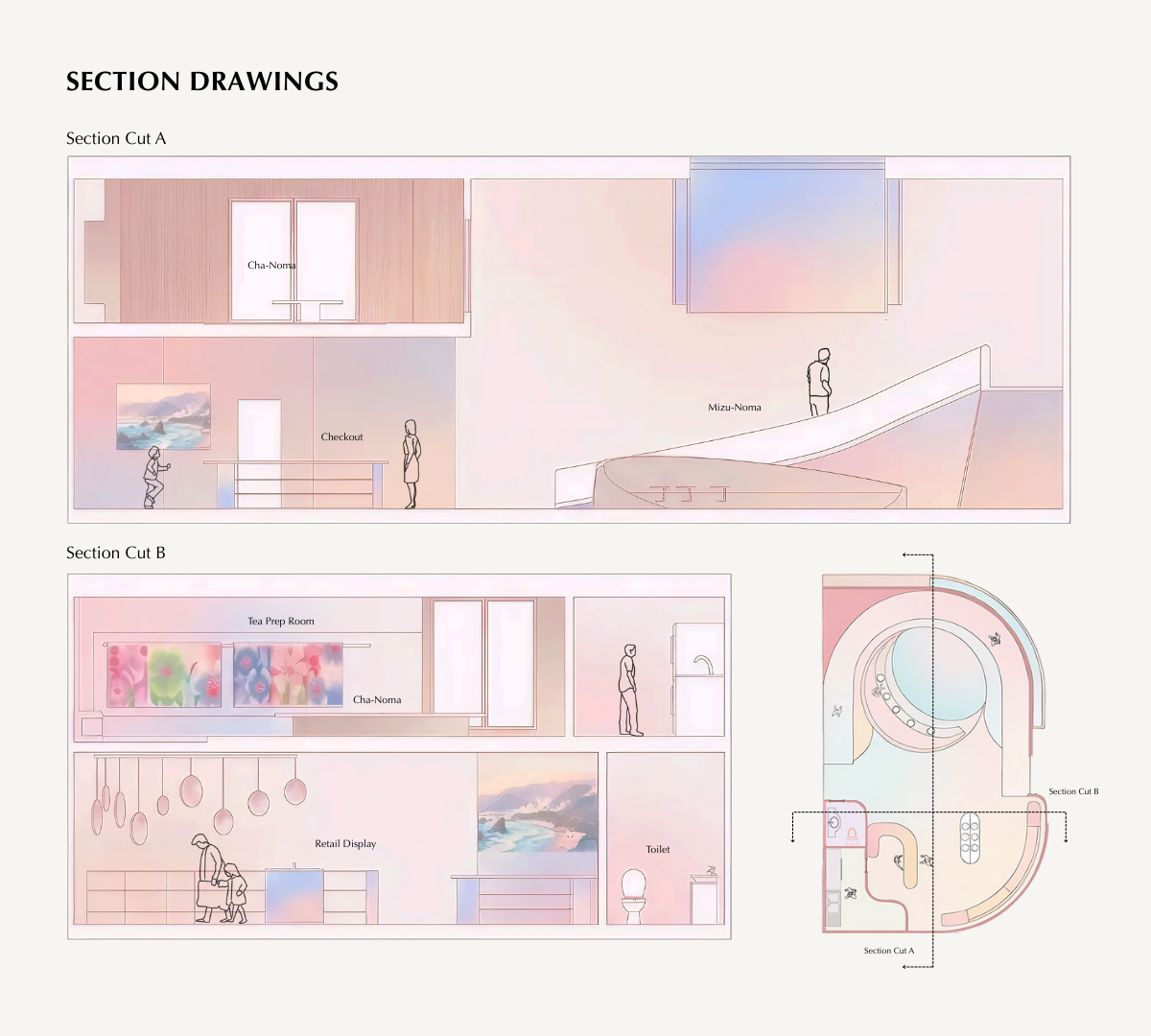
Section through retail and teahouse.
The section reveals vertical layering of light, enclosure, and material, emphasizing moments of compression and release that shape a calm, contemplative spatial experience.
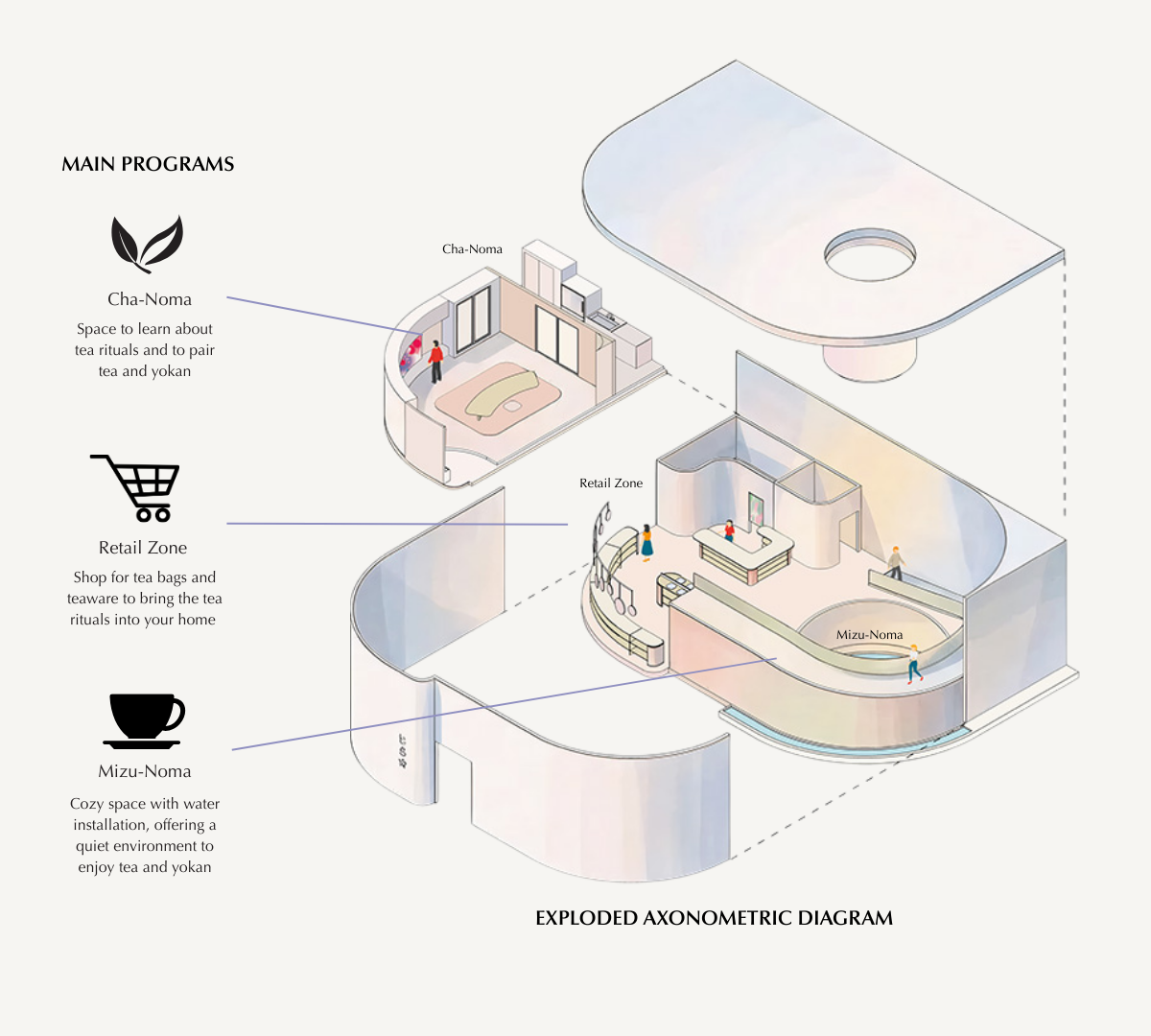
Axonometric diagram of spatial sequence.
The diagram illustrates how circulation, program, and material layers work together to support the project’s design strategy—balancing openness and restraint while framing ritual and movement.

Color and Material Palettes
Spatial Experience
Unreal Engine renders capturing the atmosphere, materiality, and circulation of the space through light and spatial depth.
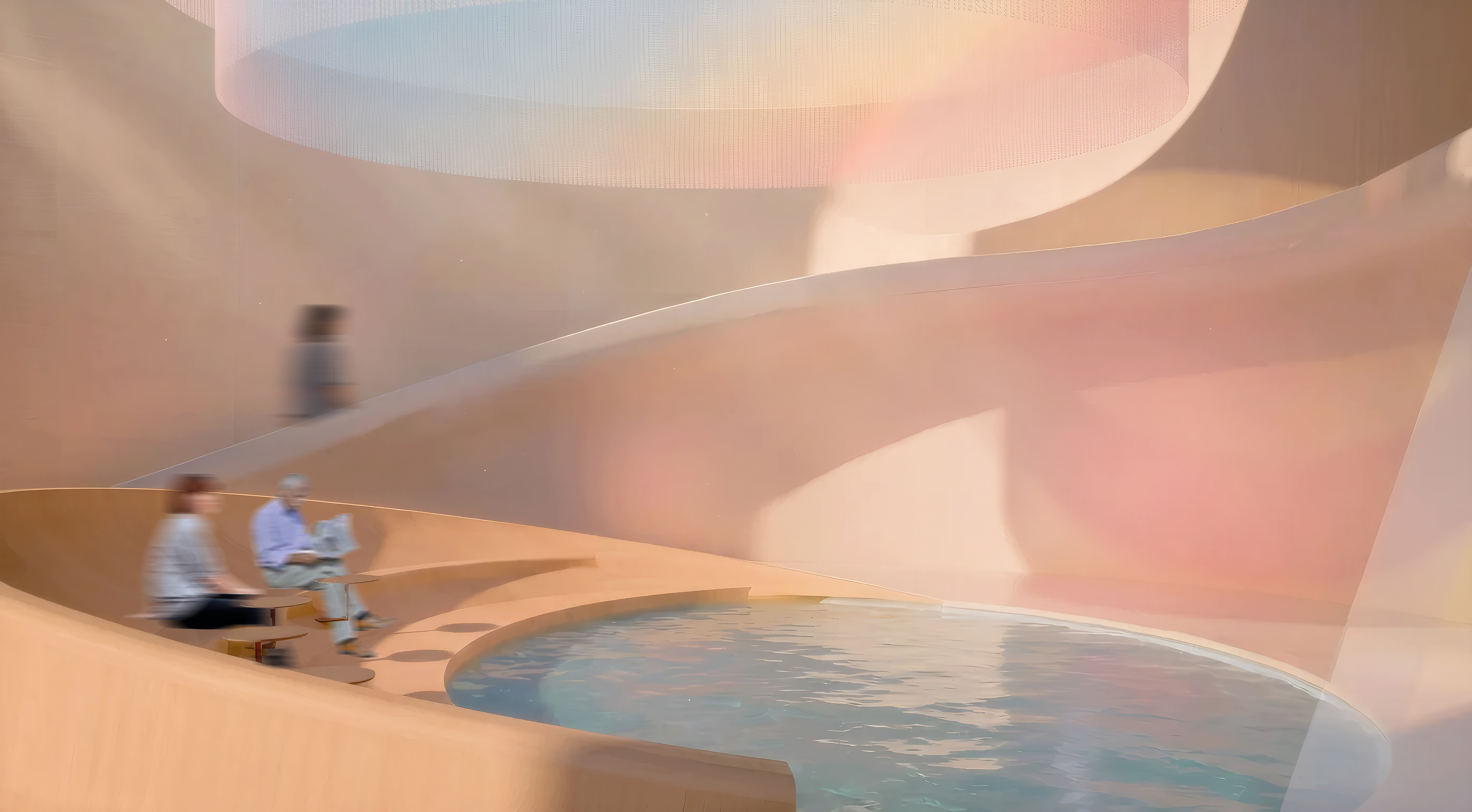
Mizunoma (water room).
A calm, transitional space where light, reflection, and material softness evoke the quiet presence of water, preparing visitors for a slower, ritualized experience.

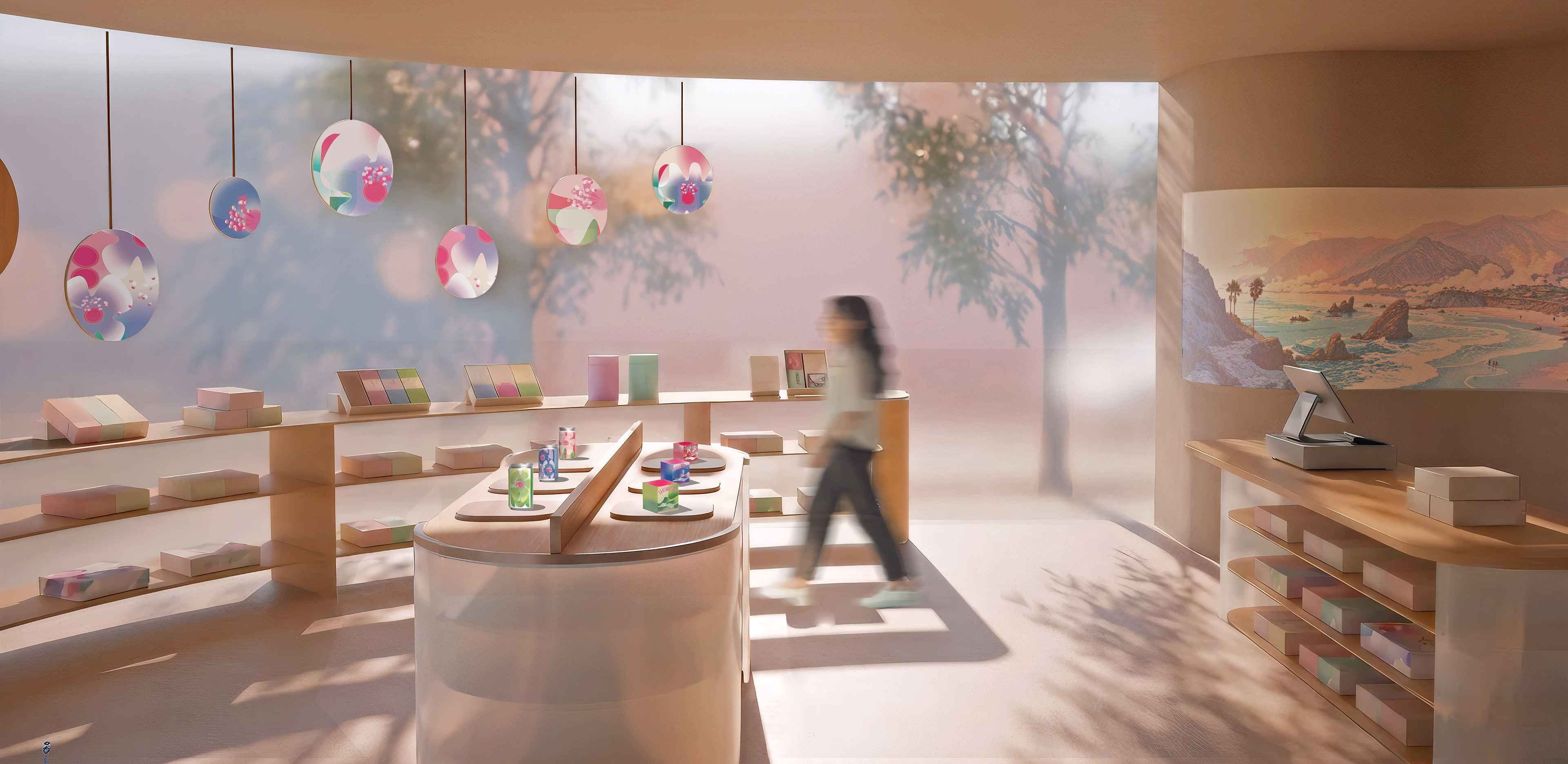
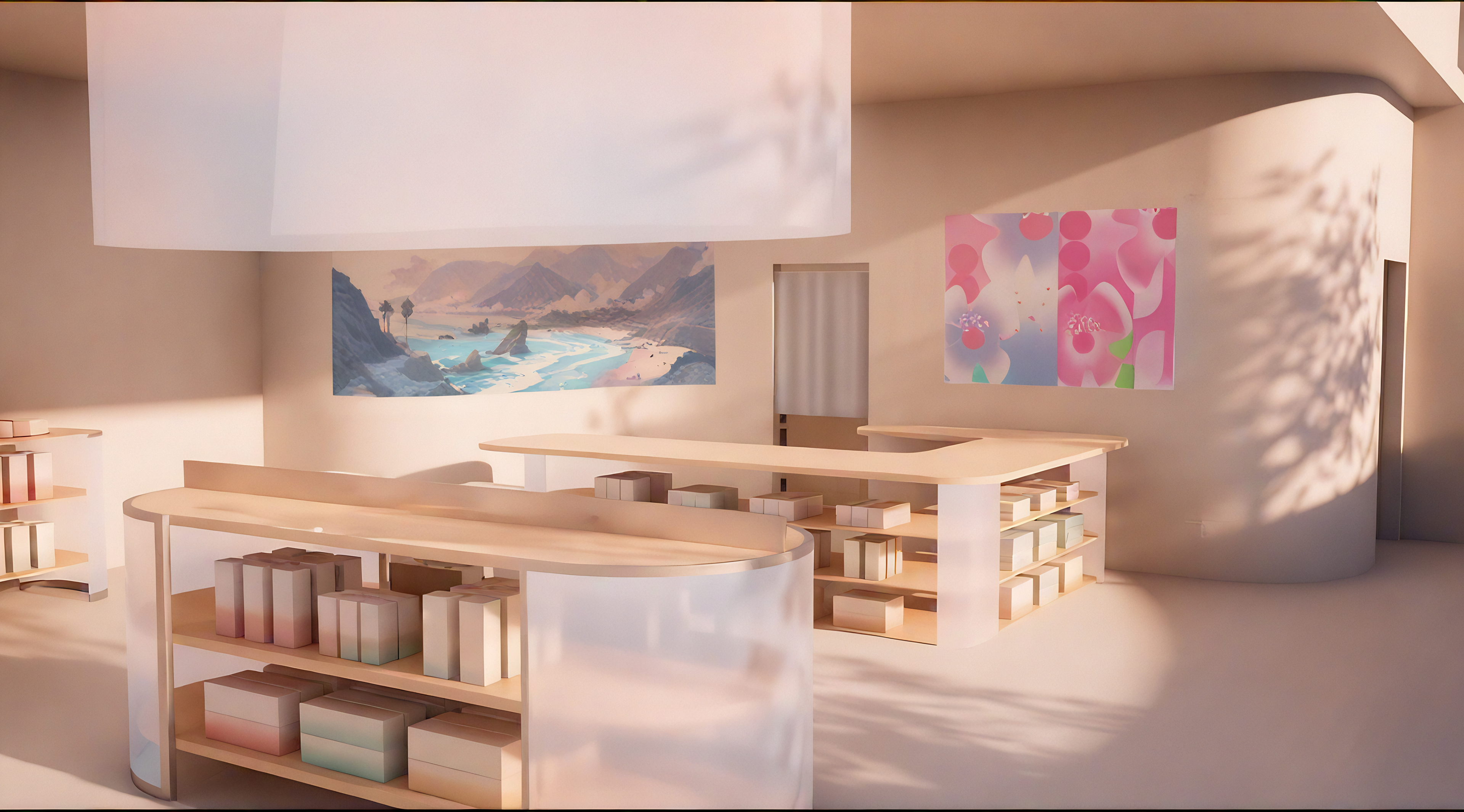
Retail space.
A curated environment that frames wagashi as both product and cultural artifact, guiding visitors through layered displays and controlled circulation.

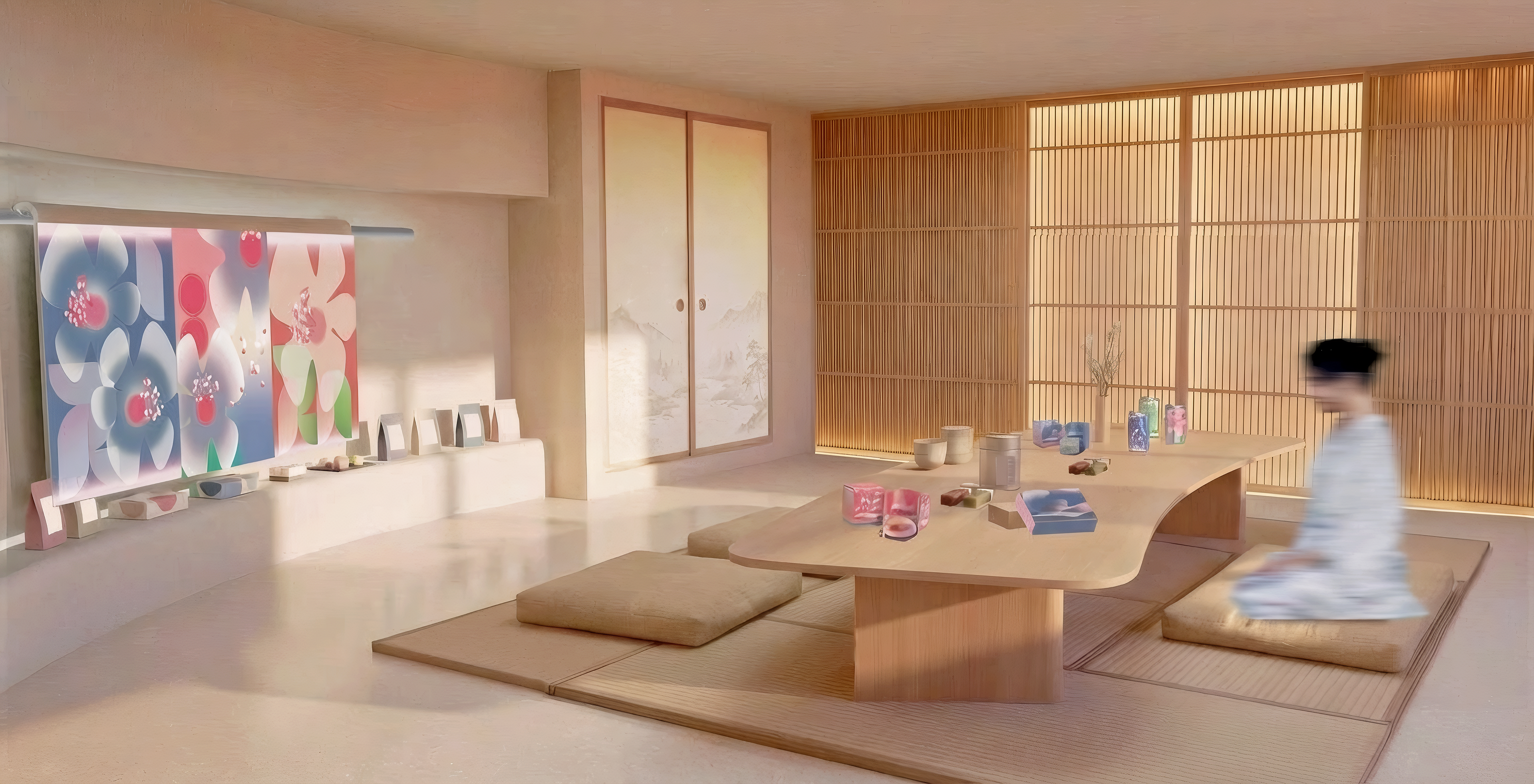
Chanoma (tea room).
An intimate setting for tea and contemplation, where restrained materiality and filtered light support moments of pause, ritual, and connection.

Product & Package Designs
Product and package designs developed in Blender, featuring original yokan forms and custom packaging for both tea and confectionery.
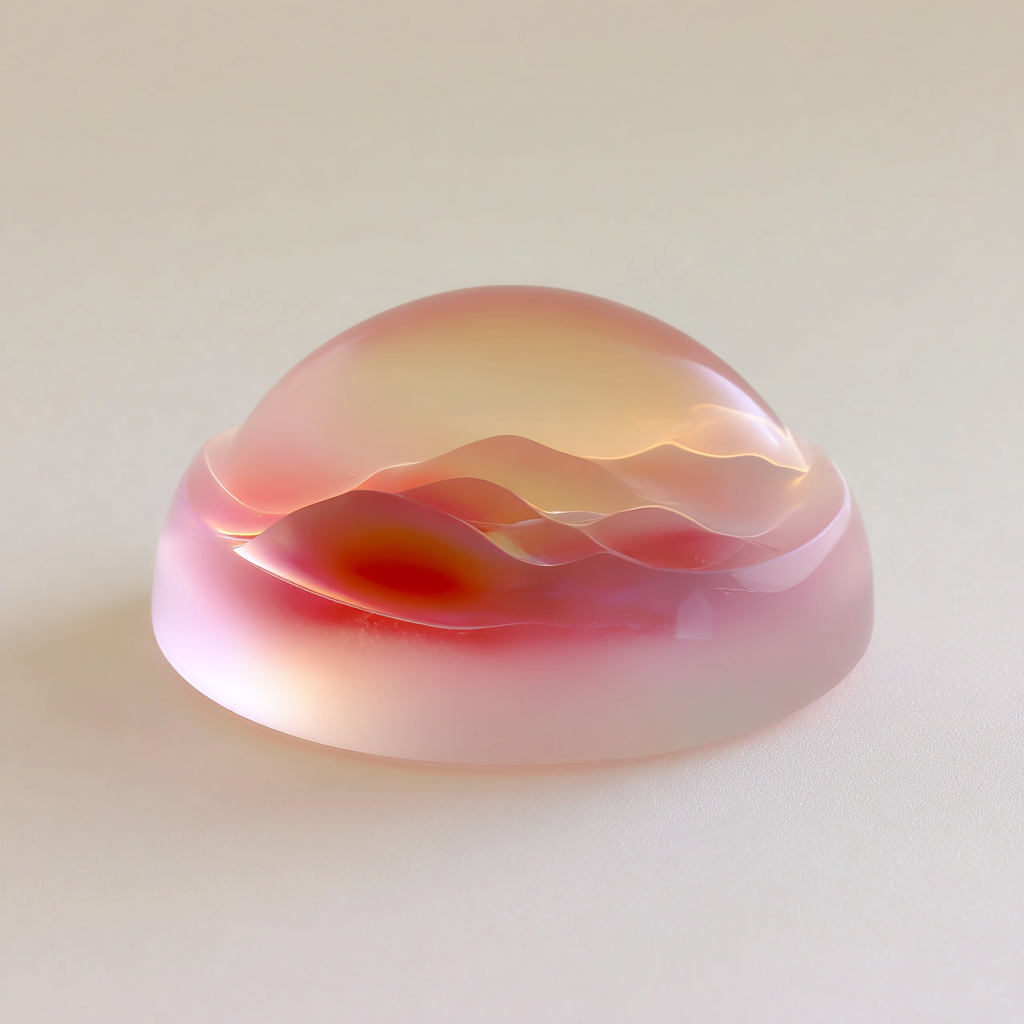
Yokan design inspired by California landscapes: Joshua Tree, Napa Valley, and Santa Monica
This design translates the desert landscape into form and color, drawing from arid textures, muted earth tones, and the quiet stillness of California’s high desert.
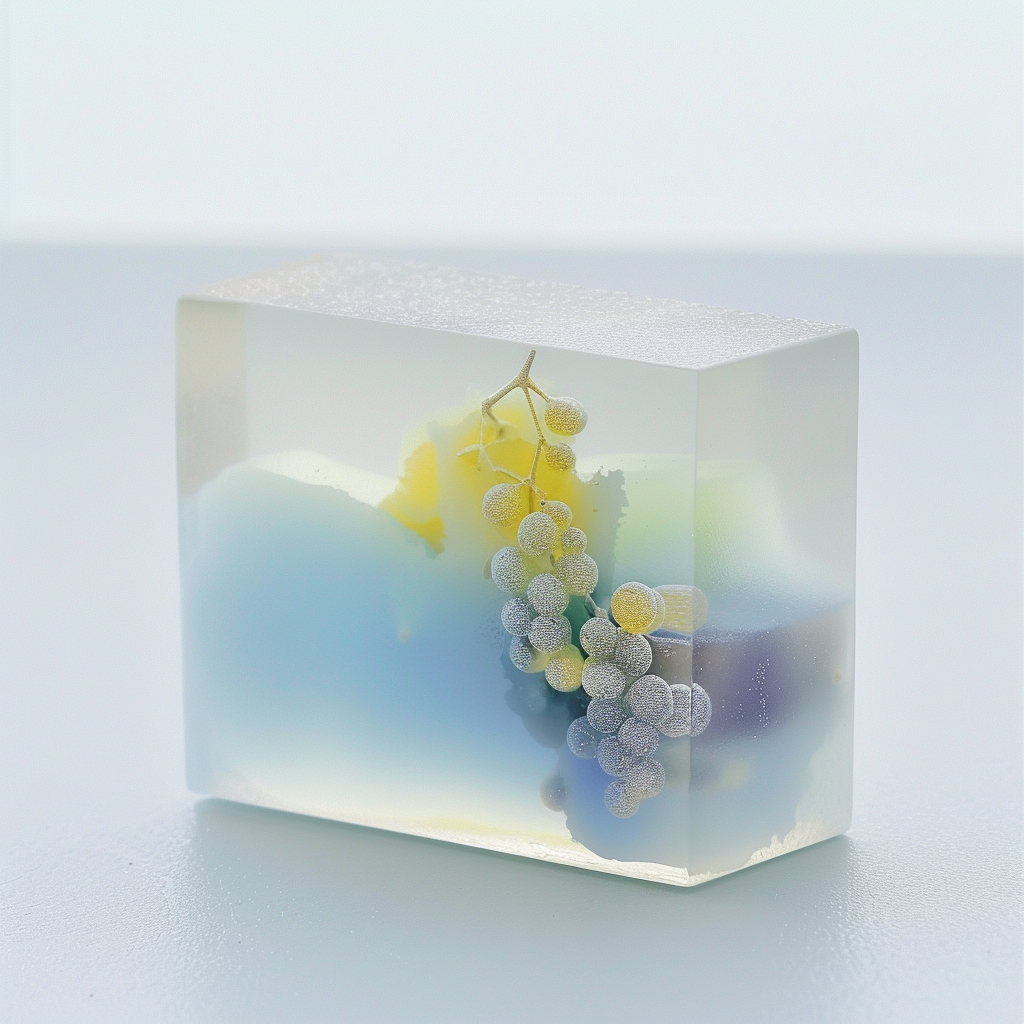
Soft gradients and layered translucency reflect vineyard rhythms, seasonal harvests, and the cultivated calm of California’s wine country.
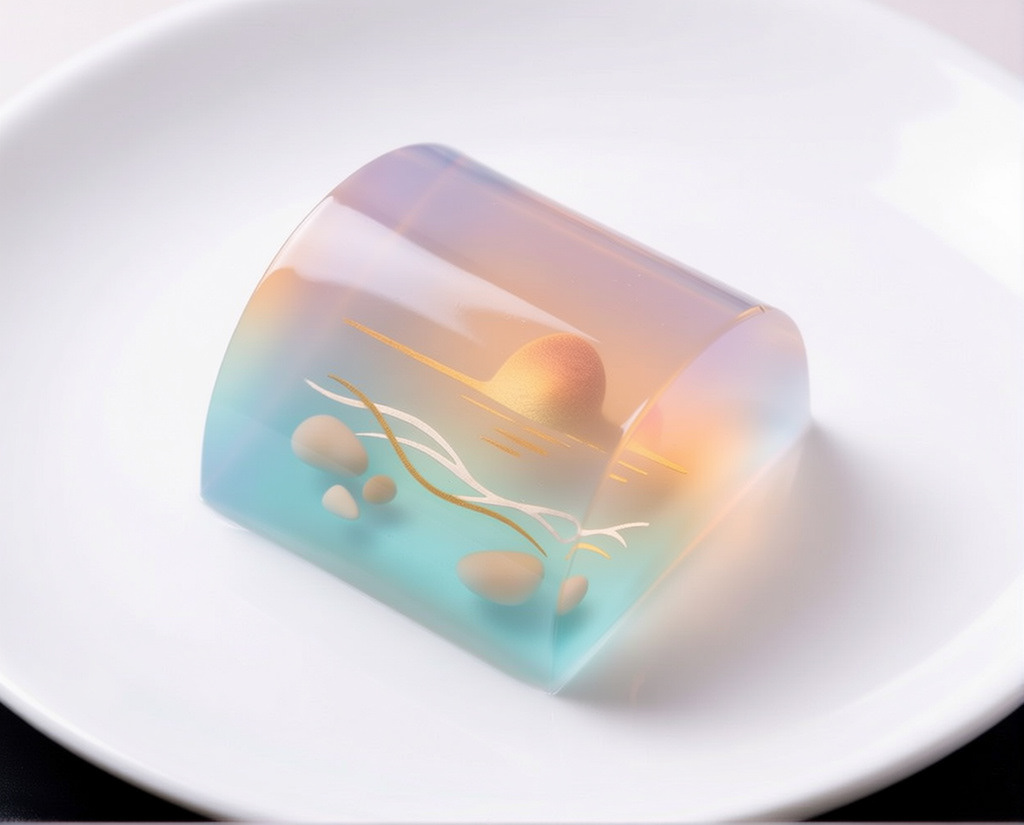
Lighter tones and fluid geometry reference coastal light, ocean movement, and the relaxed openness of Southern California’s shoreline.
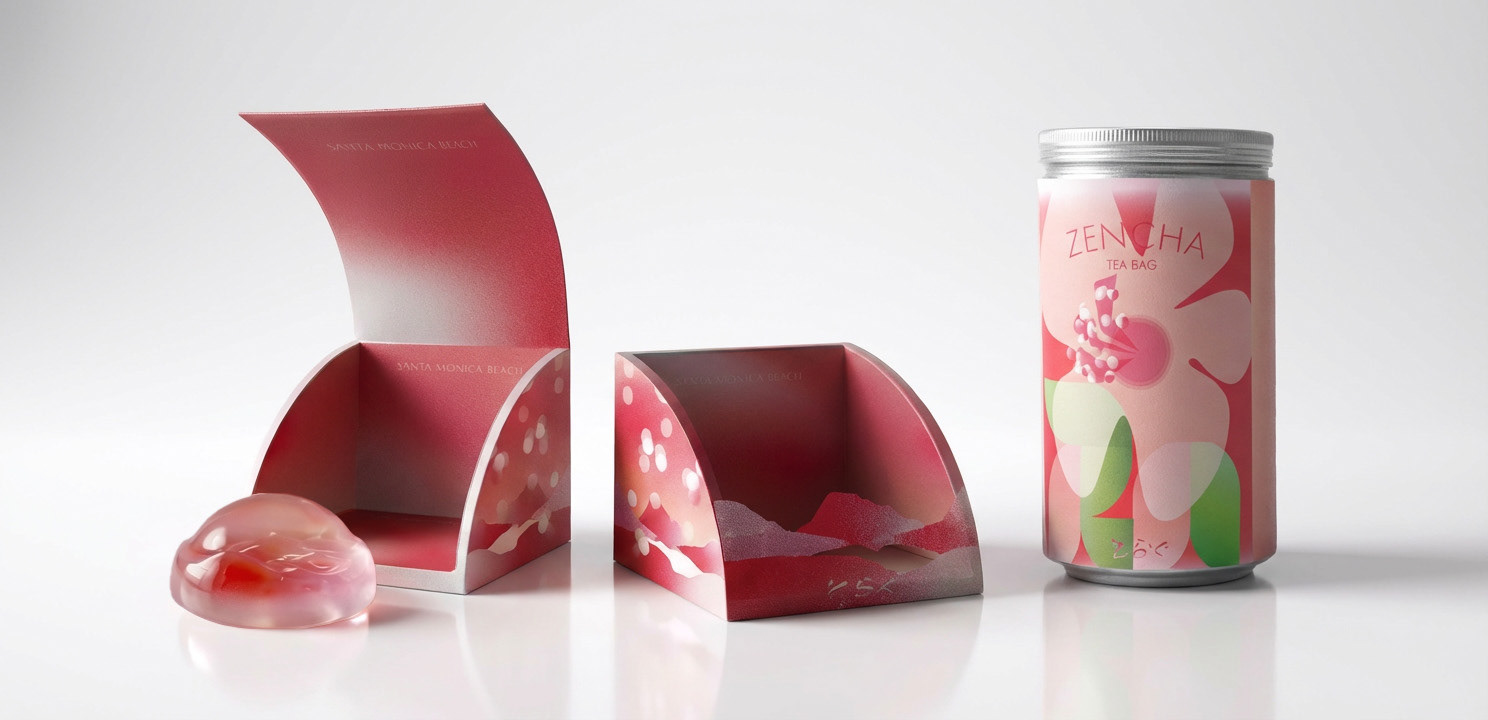
Tea and Yokan Package Design inspired by coastal light, ocean movement, and the relaxed openness of Southern California’s shoreline.
Joshua Tree - Warm red and pink gradations evoke the stillness and heat of the desert, transforming the quiet intensity of the landscape into a restrained, sculptural confection.
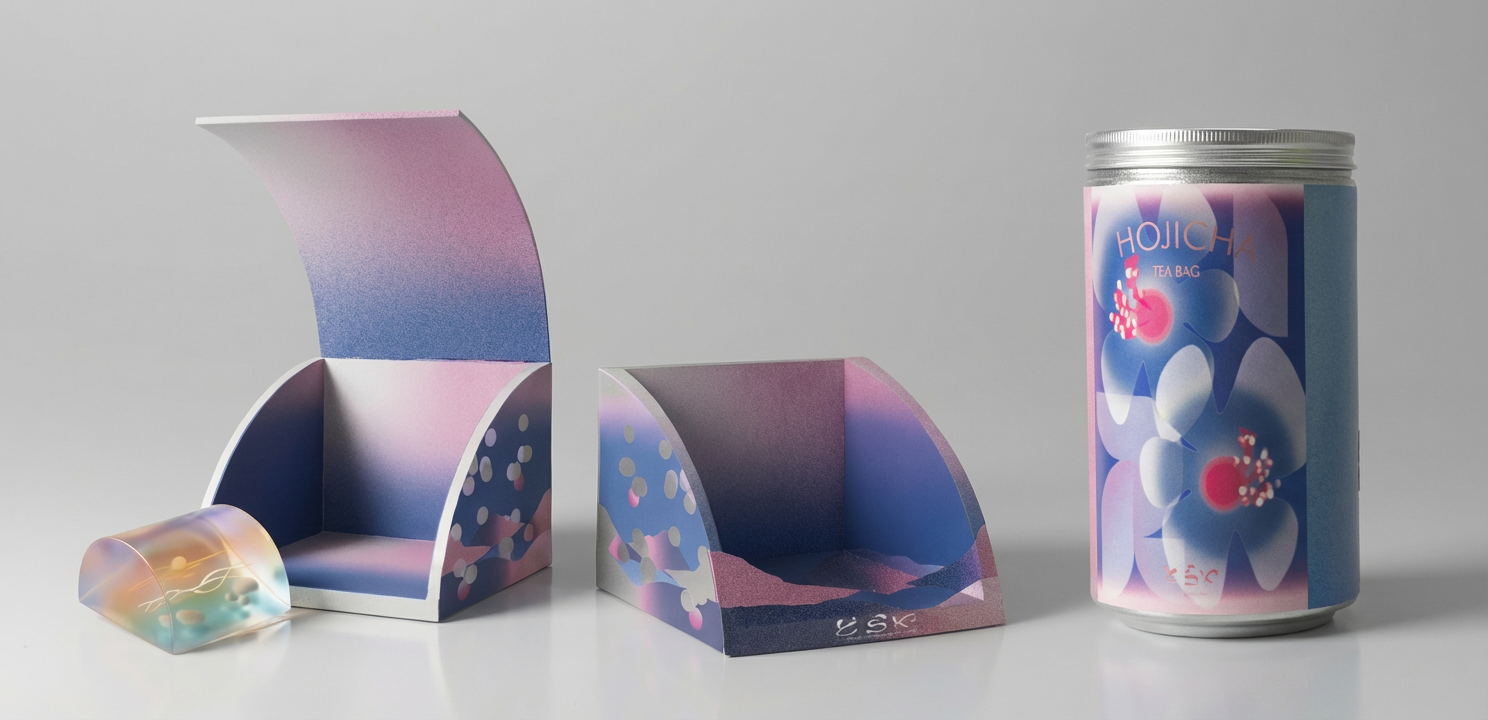
Santa Monica - Soft blue and pink tones capture the shifting colors of sunset along the coast, translating ocean light and beach atmosphere into a gentle, translucent form.
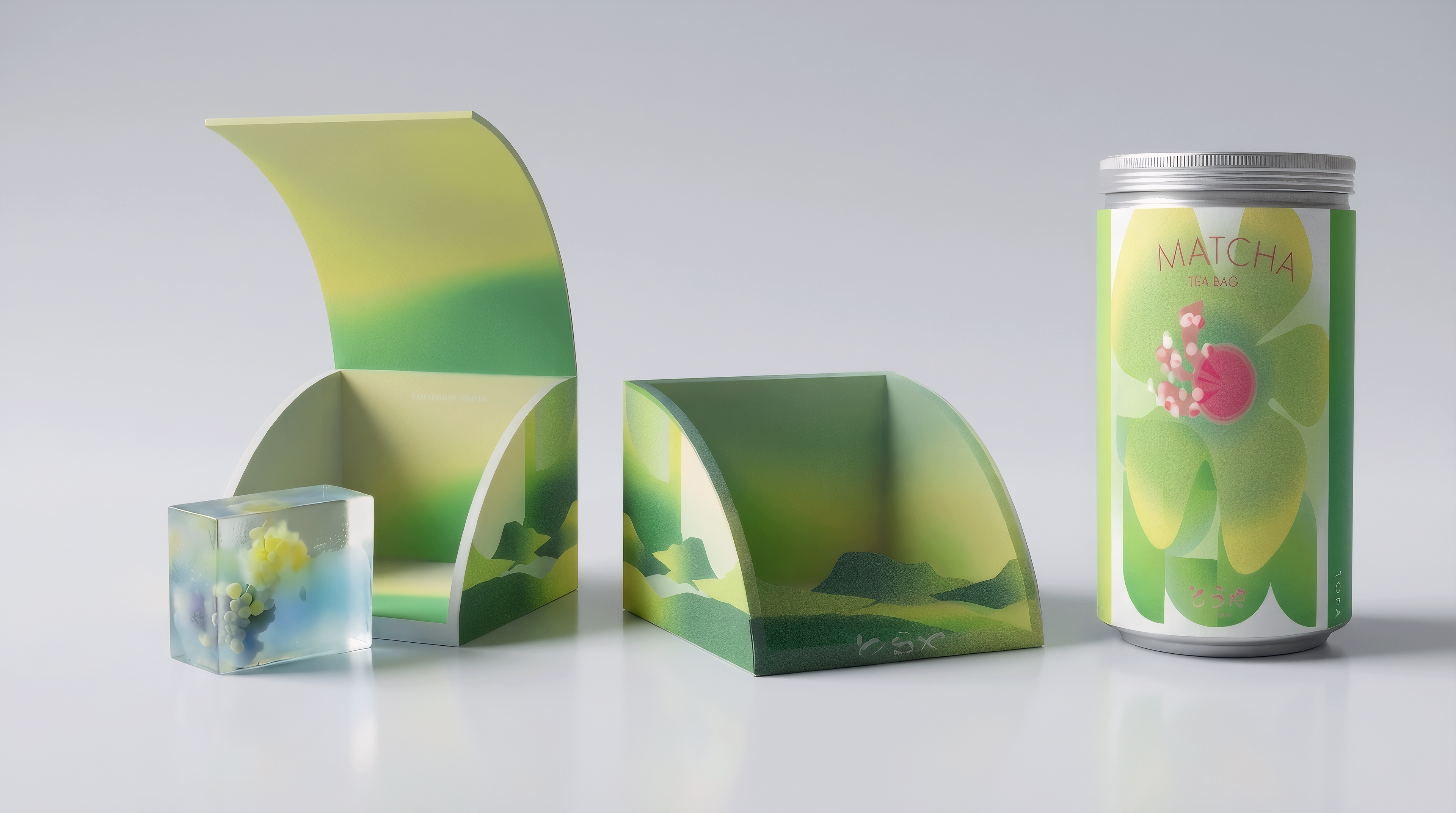
Napa Valley - Layered green hues reflect vineyard landscapes and agricultural rhythm, expressing seasonality, cultivation, and the depth of matcha through color.
Tea Coaster Design
The tea coaster series translates flavor profiles into visual language through color gradients and geometric diagrams. Each coaster reflects the character of a specific tea—such as bitterness, sweetness, body, and astringency—using soft transitions and abstracted forms to create an intuitive, sensory guide. Designed using Illustrator and Photoshop, the coasters extend Toraya’s brand experience from spatial atmosphere to tabletop interaction.
Wall Graphics — Santa Monica Beach
The wall graphic reinterprets Santa Monica Beach through a contemporary lens inspired by Japanese ukiyo-e drawing traditions. Hand-drawn in Procreate and refined in Illustrator and Photoshop, the illustration blends California coastal scenery with flattened perspective, rhythmic linework, and layered color typical of ukiyo-e prints. The result bridges Japanese visual heritage and Los Angeles landscape, reinforcing the project’s cross-cultural narrative at an architectural scale.
Final Project Film - Spatial Walkthrough of Toraya LA Store
A three-minute project film was created to communicate the full spatial narrative of the Toraya Teahouse LA, combining animated walkthroughs, key renderings, diagrams, and atmospheric sequences. The video guides viewers through the project as an experiential journey—revealing circulation, transitions, and moments of pause across the retail zone, Mizunoma, and Chanoma.
Back to Top