Community Space Design
Art Center College of Design Summer 2025
Collaboration Work with Crystal Chng
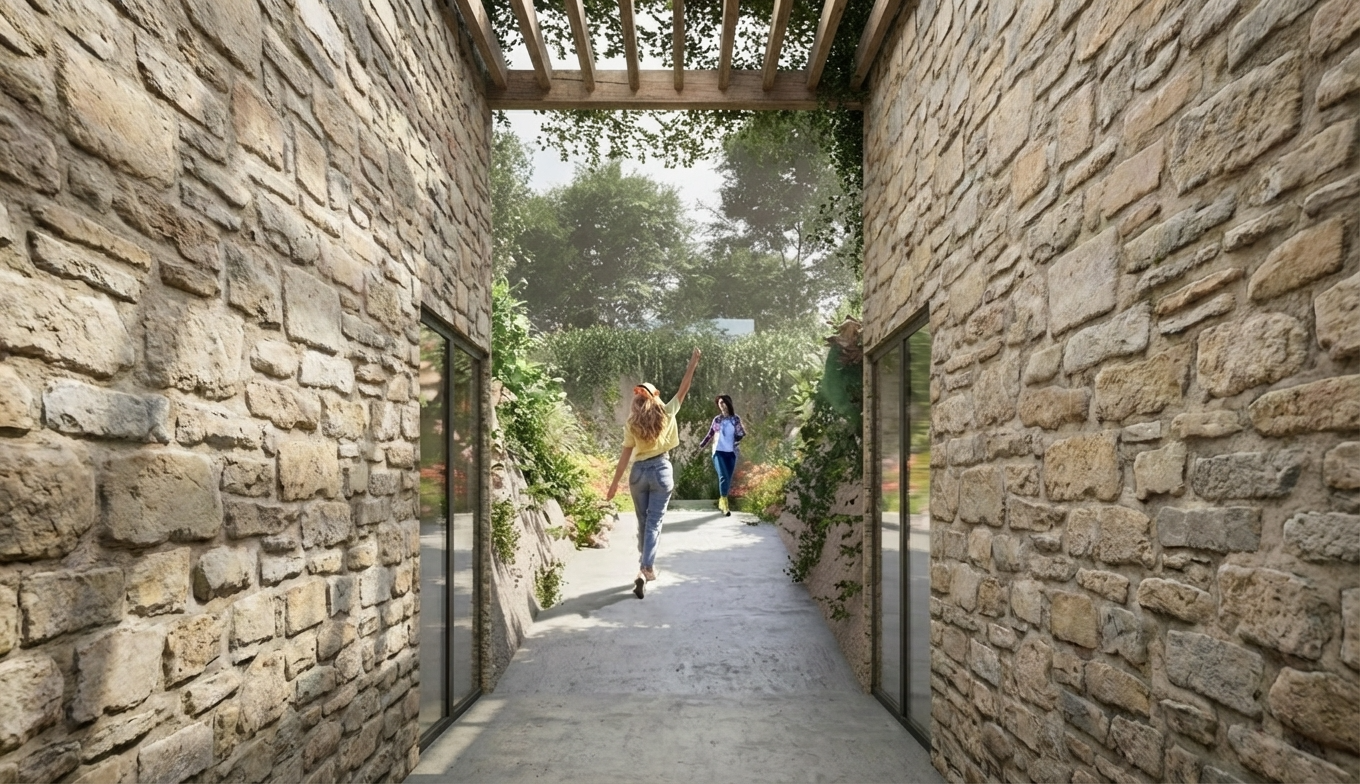
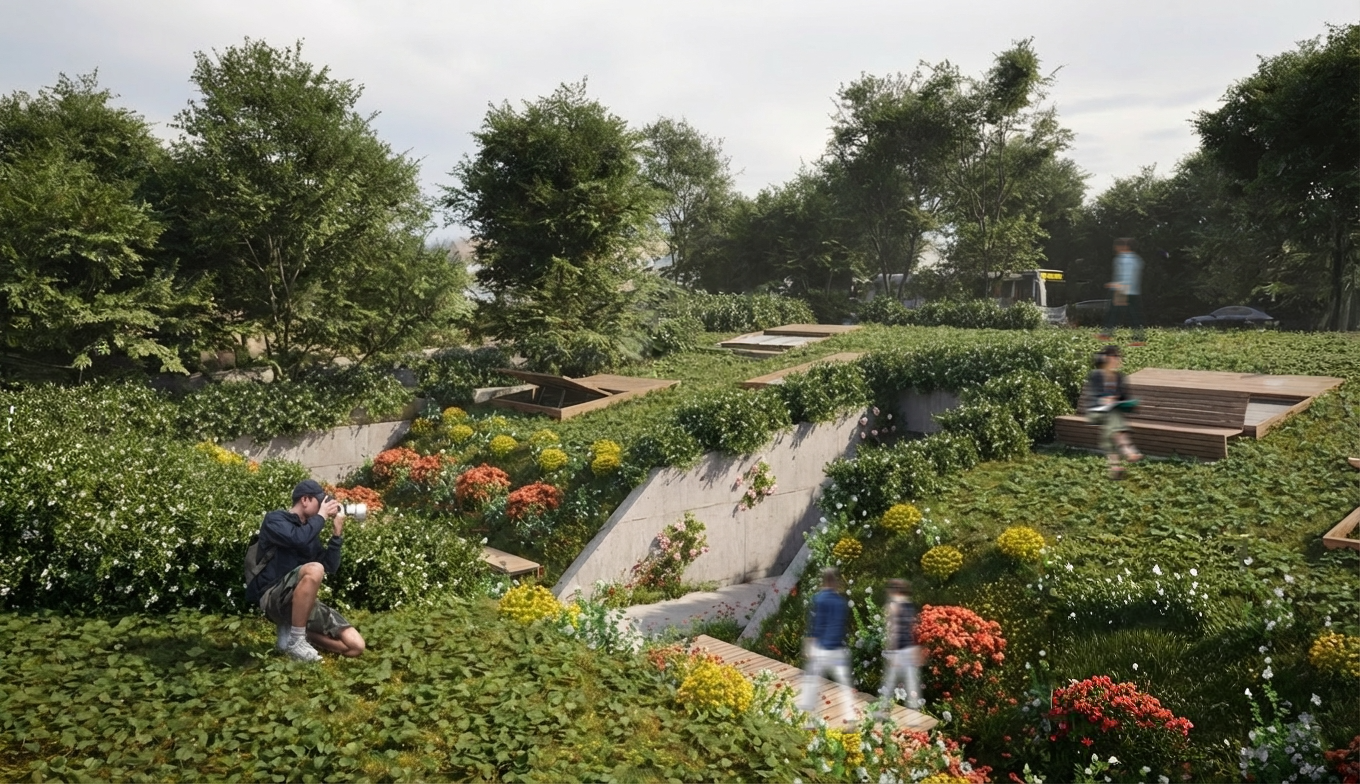
Arrival at the central garden.
Rendered in Unreal Engine to capture atmosphere, scale, and the gradual reveal of the project’s communal heart.

Project Overview
The Nest is a post-fire community sanctuary designed in response to the Eaton Fire, prioritizing resilience, healing, and collective recovery. Inspired by the greenhouse as a metaphor for healing and regrowth, the project provides protected yet open environments where creativity, community, and resilience can emerge together.
Project Inspiration
The Nest is a space born from loss and designed for renewal. Inspired by the resilience of communities after the Eaton Fire, it reimagines how architecture can heal — not just physically but emotionally. This project gives them back a safe, nurturing space to create, connect, and grow.
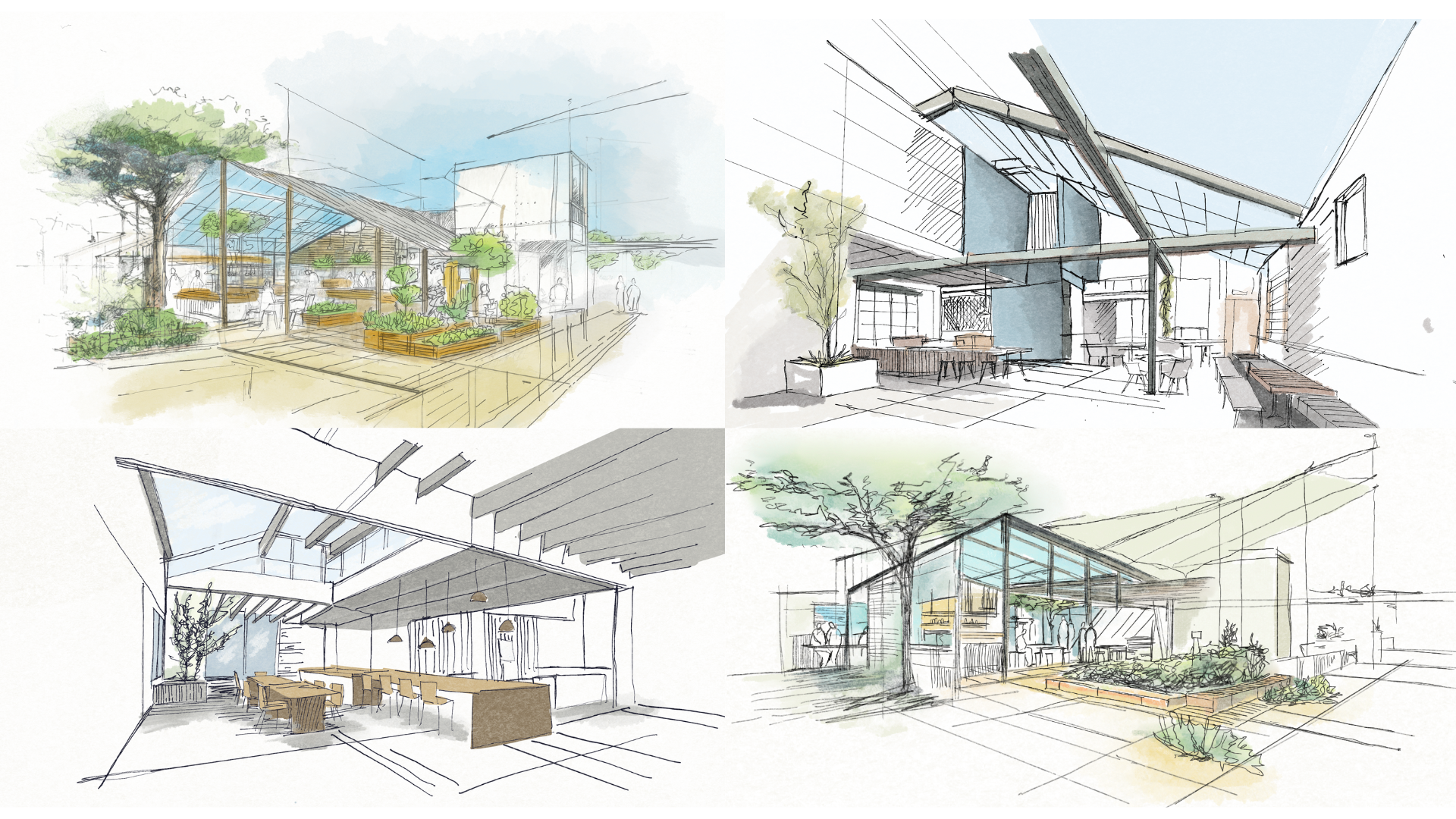
Hand-drawn ideation sketches.
Early explorations of spatial organization, circulation, and form were used to test programmatic relationships and experiential flow.
Design Strategy
The Nest is guided by three interconnected strategies—Healing through Landscape, Resilience, and Community Connection—that together shape a space for recovery, creativity, and long-term sustainability in post-fire Altadena.
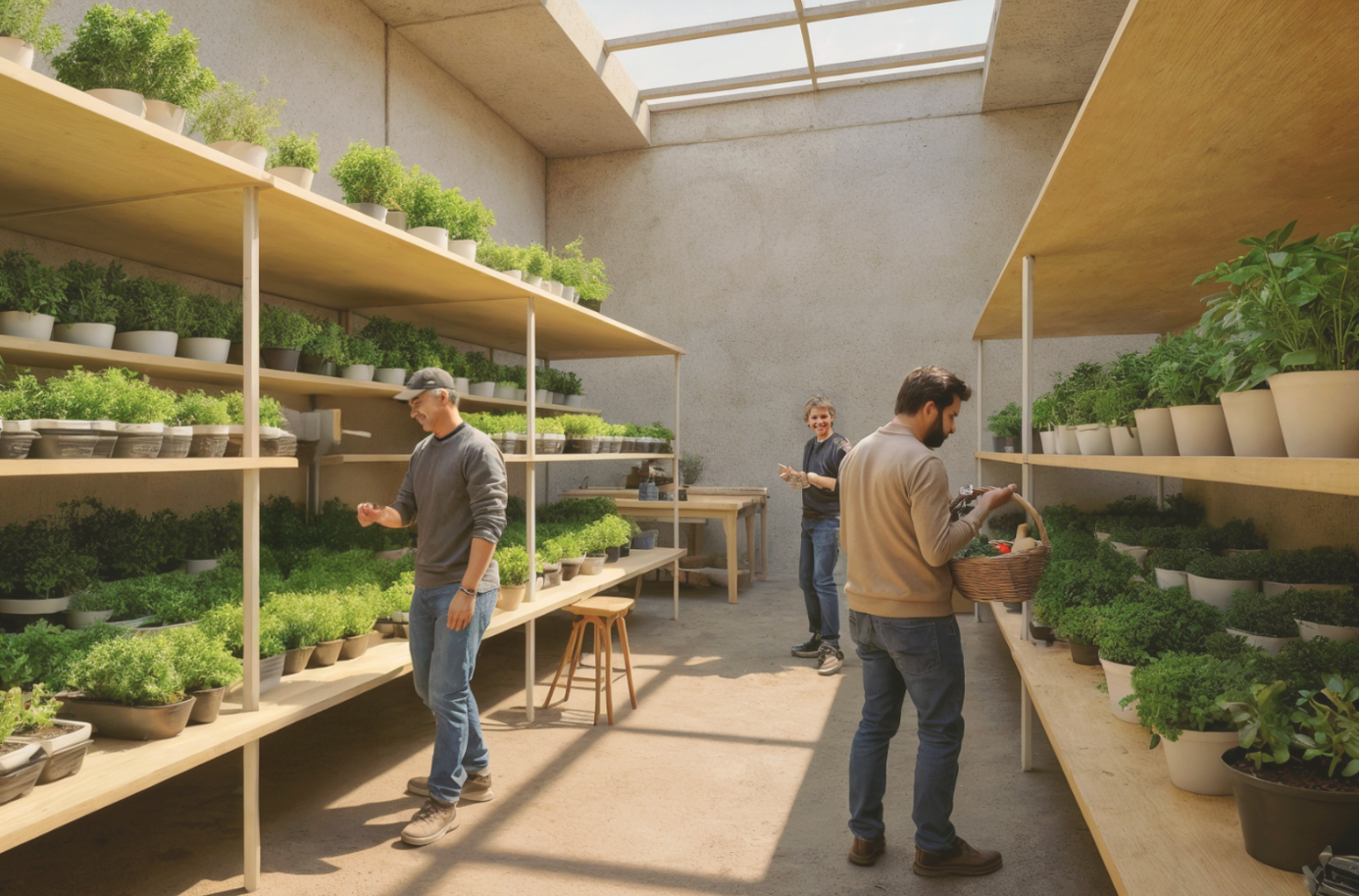
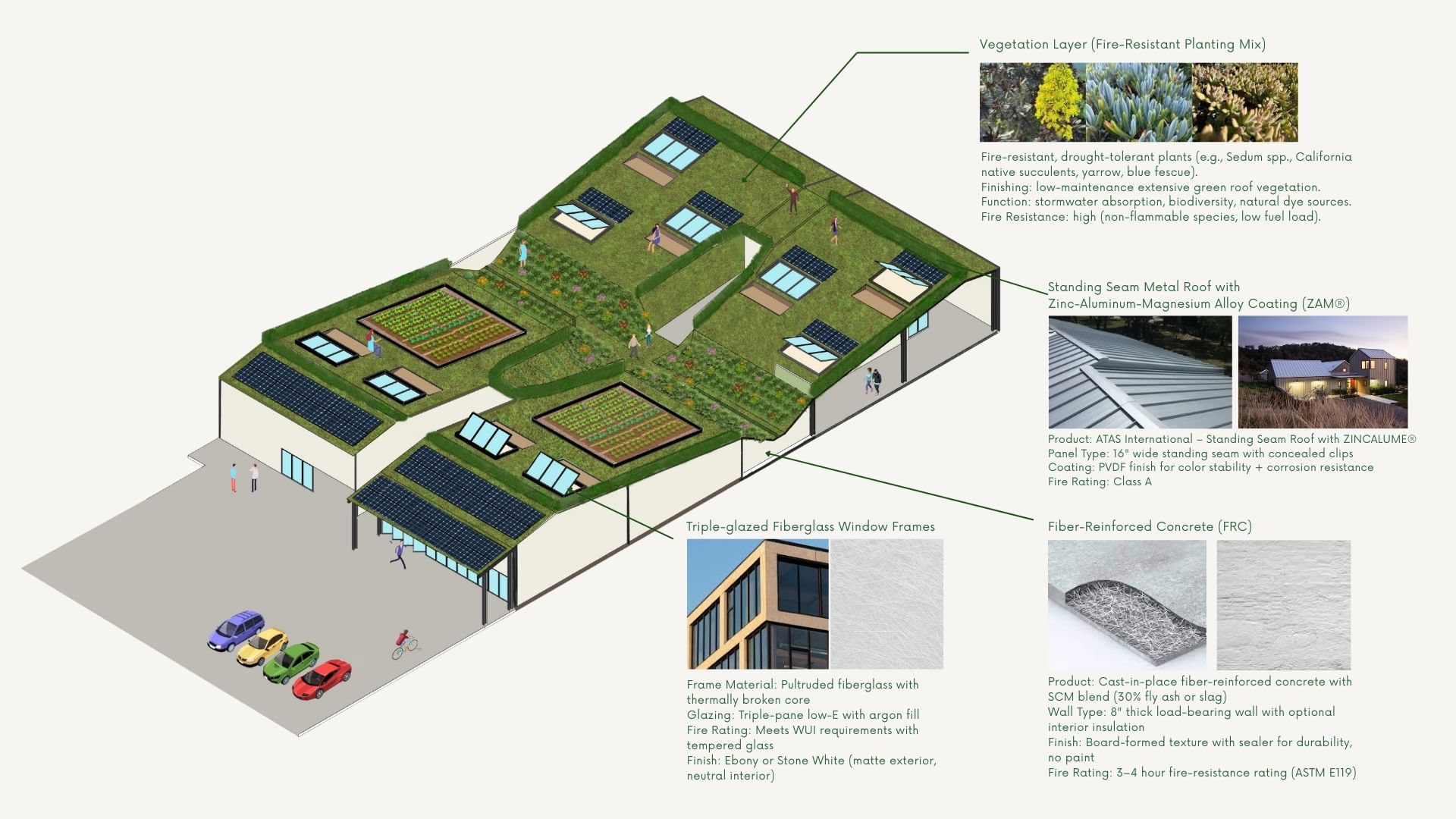
Healing is achieved through a close relationship with the landscape, using topography, outdoor gardens, and a bioswale system to ground the space and support emotional restoration. Resilience is embedded through fire-resistant materials, green roof systems, and self-sufficient design approaches that respond directly to wildfire conditions. Community connection is fostered through open circulation, shared communal spaces, and strong indoor–outdoor relationships that encourage interaction, visibility, and collective support.
At the intersection of these strategies, The Nest becomes a safe haven that balances protection with openness—supporting both individual healing and communal resilience.

Target Audience
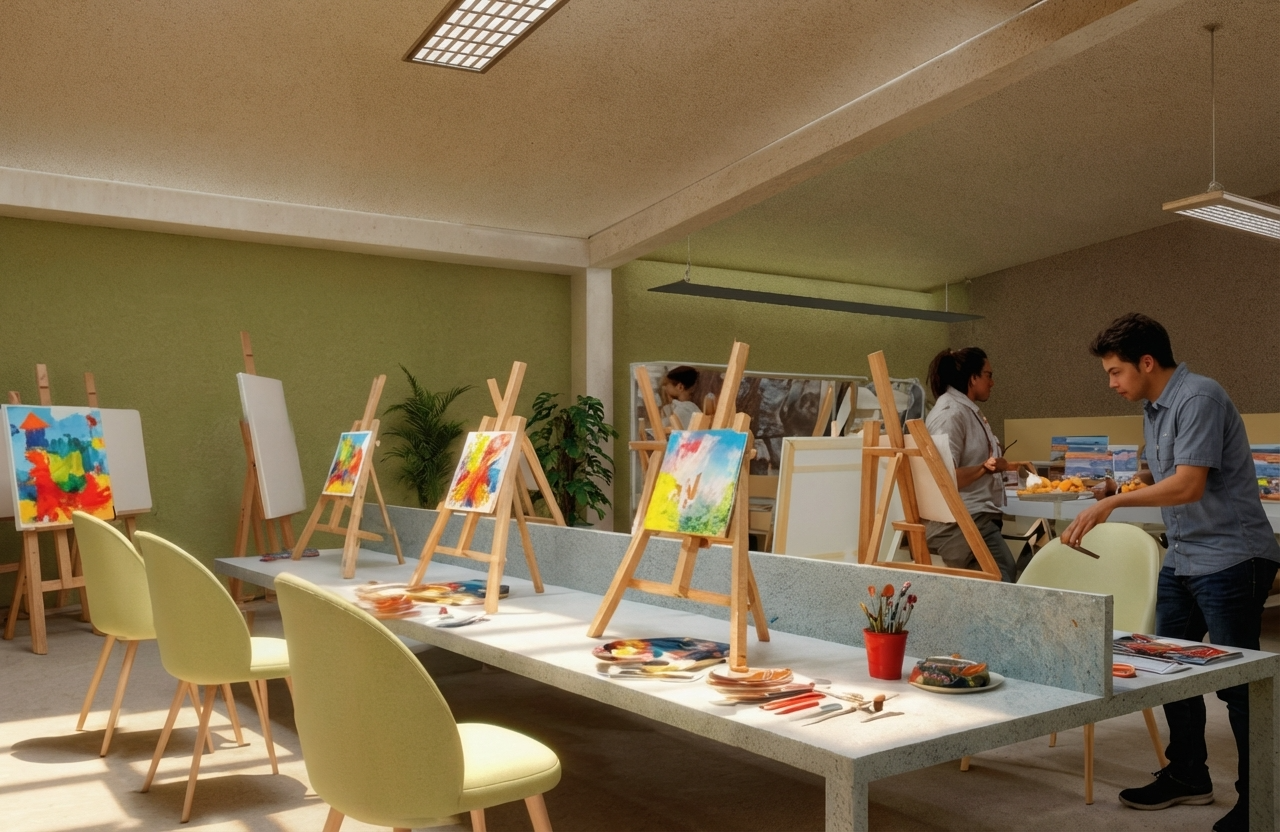
The Nest is for the Altadena artists who lost studios and tools. It is for the public community that needs spaces for gathering, dialogue, and recovery. 
Technical Diagrams 
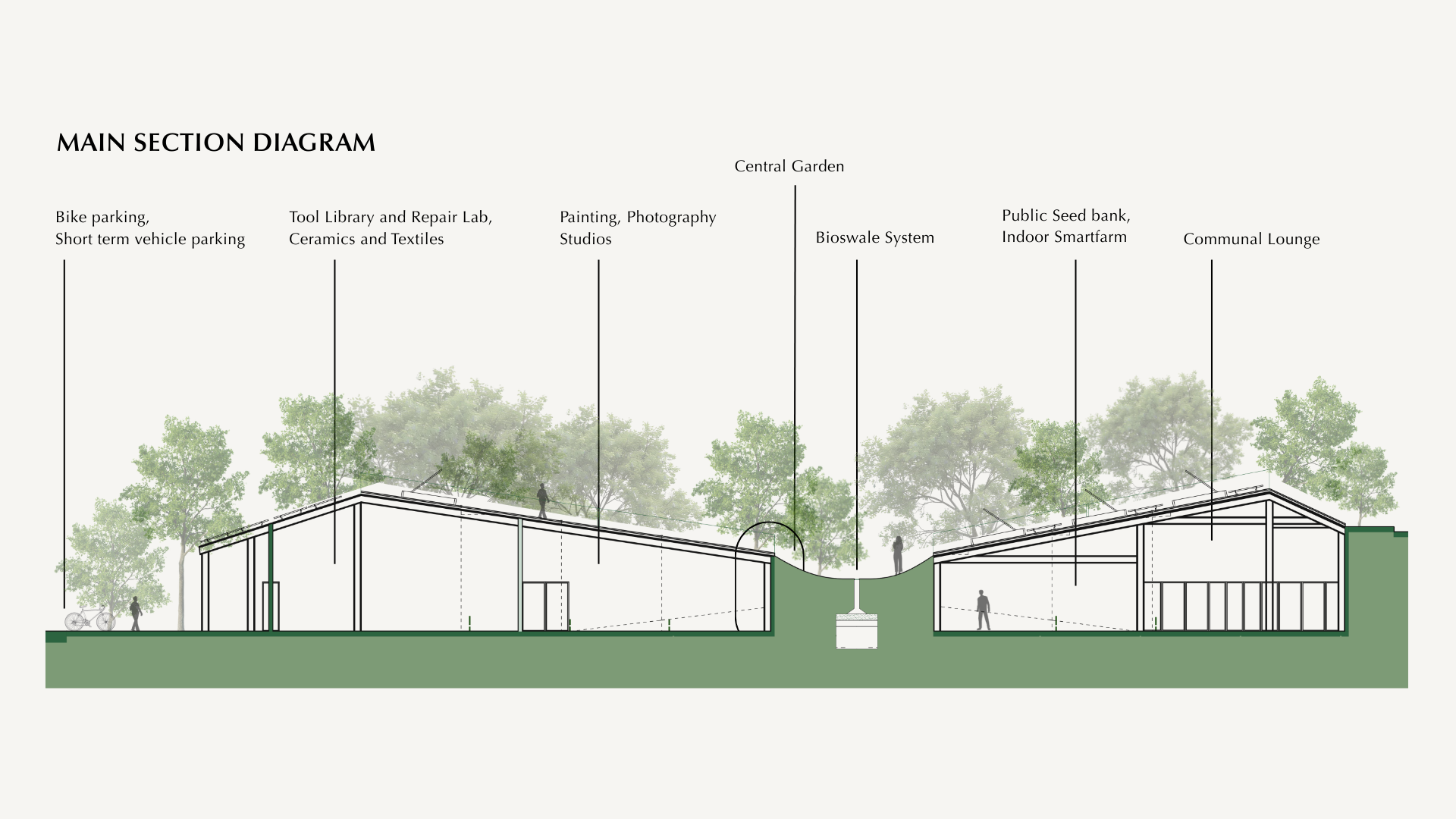
The section illustrates the layered relationship among artist studios, a communal lounge, and a central garden, revealing how topography and circulation integrate indoor and outdoor spaces.
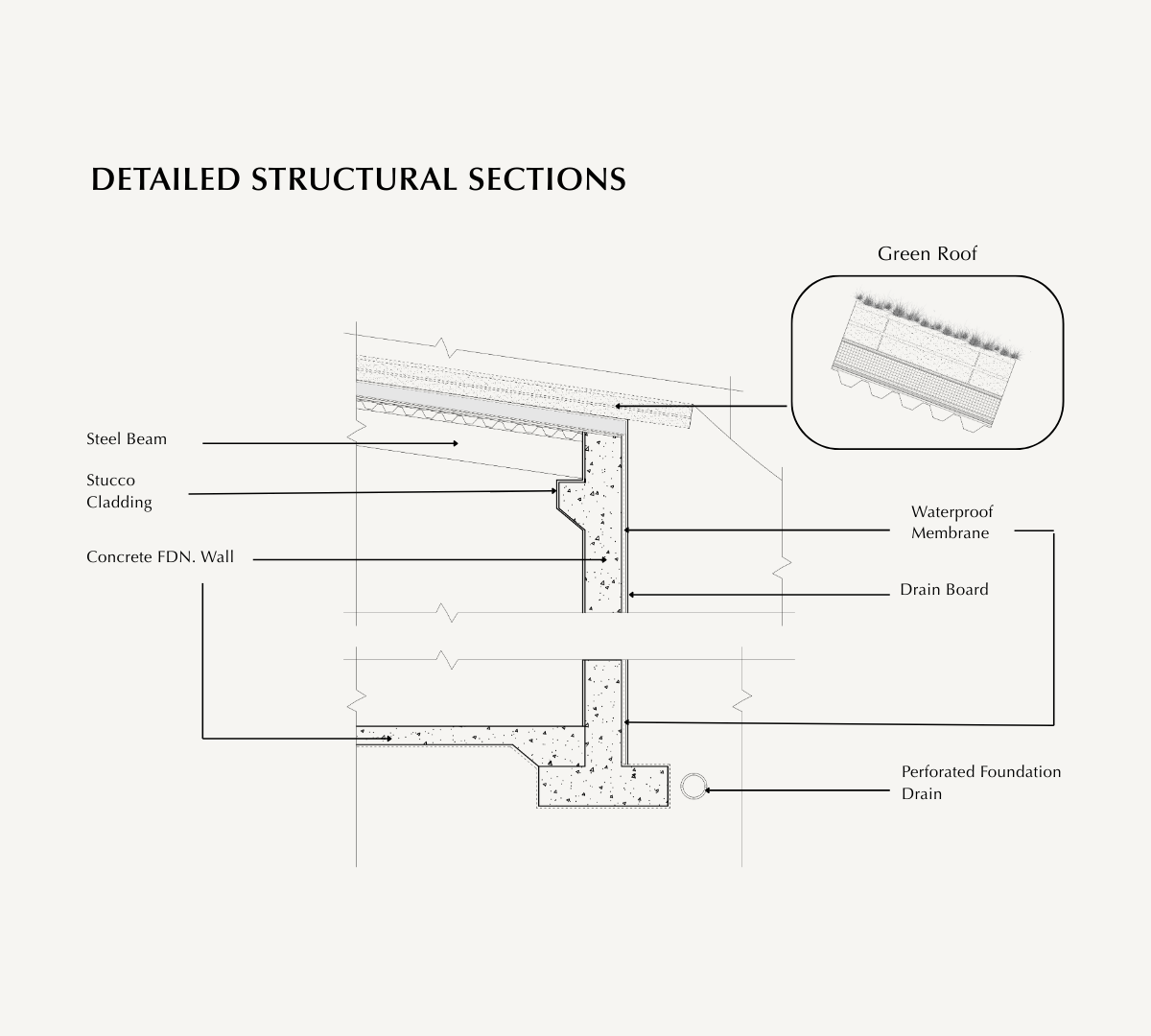
Wall and roof assembly detail. A technical section highlighting the integration of steel structure, fire-resistant construction, waterproofing, drainage, and foundation systems designed for long-term resilience.
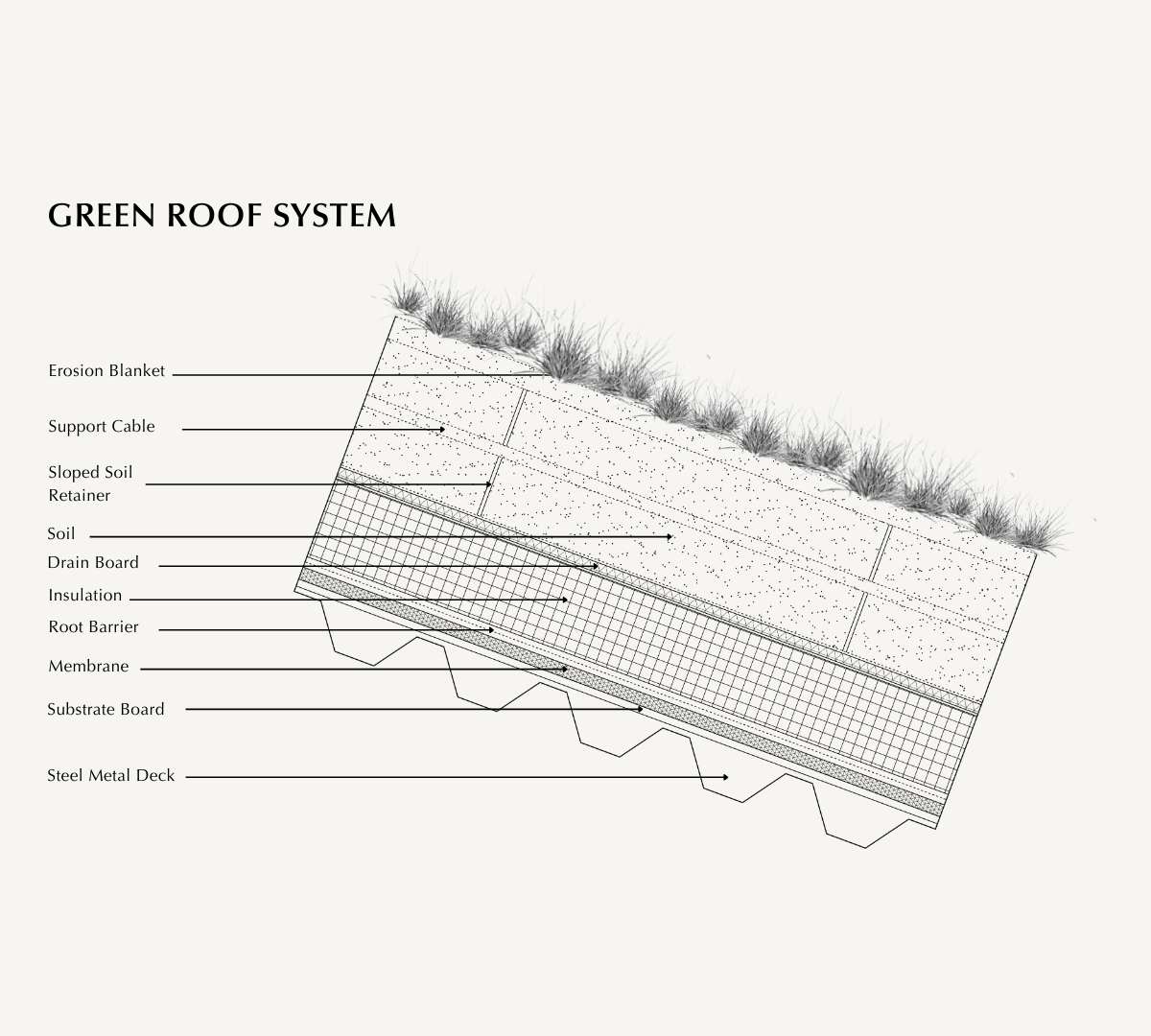
Green roof assembly. A layered system incorporating erosion control, sloped soil retention, drainage, insulation, and planting to enhance thermal performance, stormwater management, and fire mitigation.
Bioswale and water filtration system. A section detail showing multi-layered filtration through native plants, sand, and gravel, collecting and reusing stormwater for on-site irrigation.
Floor Plan & Circulation Strategy
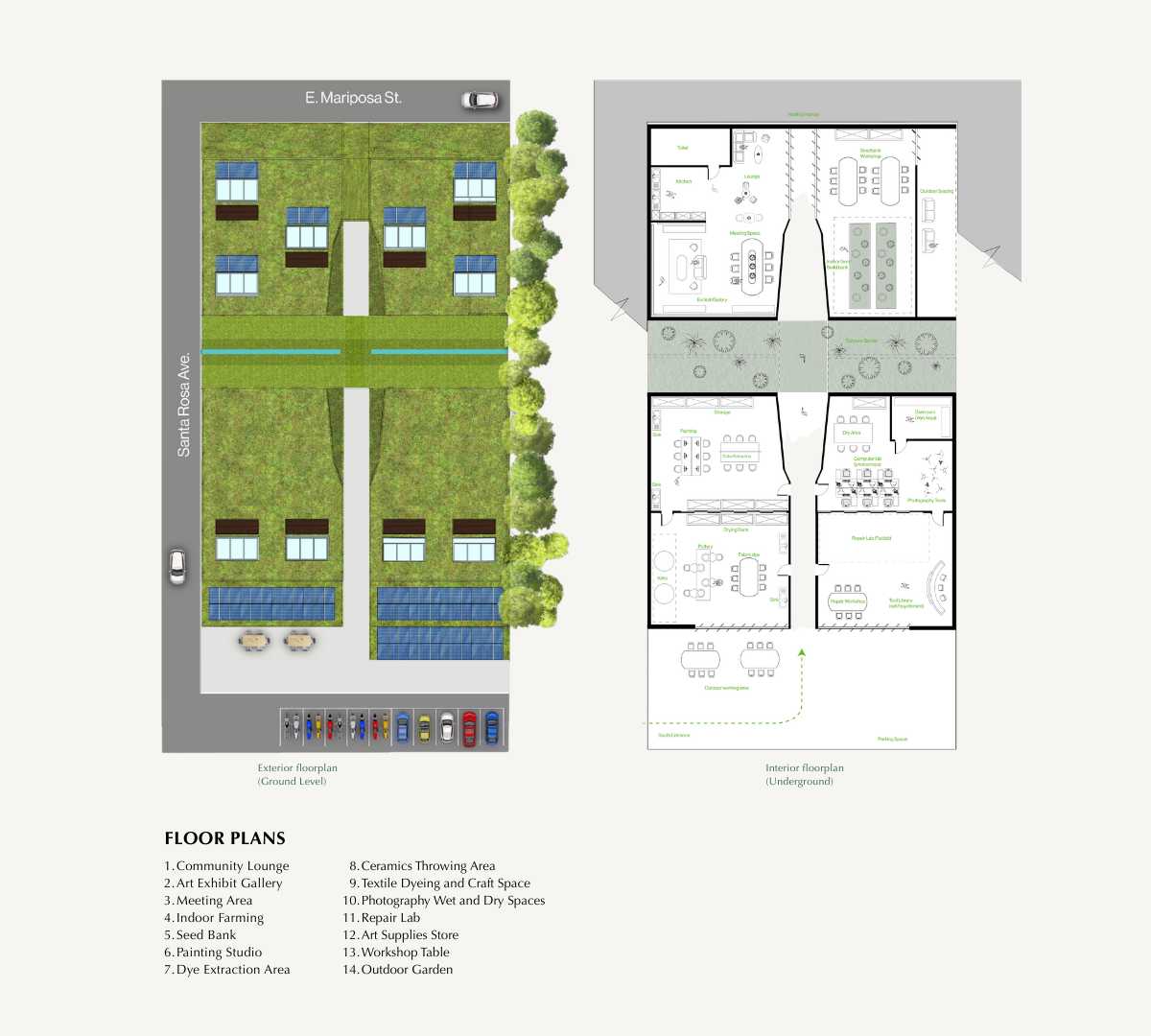
The floor plan is organized around a central garden that acts as both the physical and emotional heart of The Nest. Circulation paths are intentionally directed inward, guiding visitors and residents through a sequence of artist studios, shared workspaces, and communal zones before converging at the garden. This inward movement reinforces a sense of refuge—drawing people away from the surrounding landscape shaped by wildfire toward a protected, restorative core.
The central garden serves as a moment of pause within the circulation loop, offering visual relief, natural light, and a direct connection to the landscape. From this point, movement flows back outward into adjacent programs, establishing a continuous loop rather than a linear path. This circulation strategy supports both individual focus and communal encounter, allowing users to move intuitively between solitude and collective engagement.
By anchoring circulation around the garden, the floor plan translates the project’s broader narrative of healing, resilience, and community into spatial experience—where movement itself becomes a quiet ritual of grounding and reconnection.
Material Choices
Spatial Experience
Animated sketches are used to explore and communicate the spatial experience of The Nest through movement. Rather than presenting fixed viewpoints, the animations simulate a slow, continuous walkthrough—revealing how space unfolds over time through changes in scale, light, and enclosure.
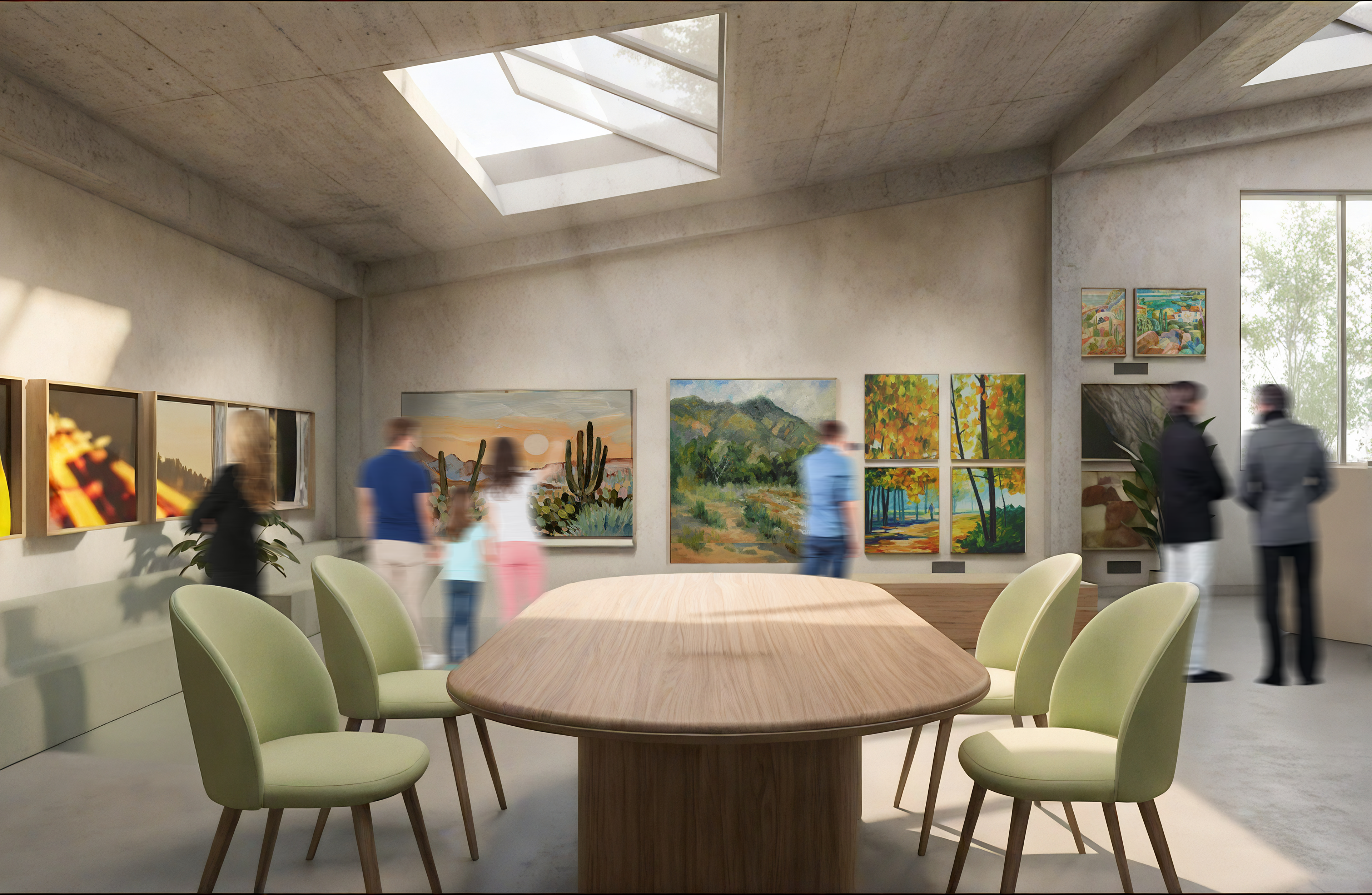
As the viewer moves through studios, circulation paths, and into the central garden, the sketches emphasize moments of transition: compression and release, threshold crossings, and shifting relationships between interior and landscape. These sequences mirror the project’s narrative of retreat and reconnection, guiding users from protected, inward-facing spaces toward shared and restorative environments.
The animated walkthrough allows spatial qualities—such as rhythm, proximity, and atmosphere—to be understood intuitively, translating the project’s design story into an experiential journey rather than a static representation.
Digital Renders of Space
First impression: Central garden approach.
The exterior view introduces The Nest through a calm, landscape-driven threshold, where light, greenery, and open circulation establish a sense of refuge and arrival.

Physical Models
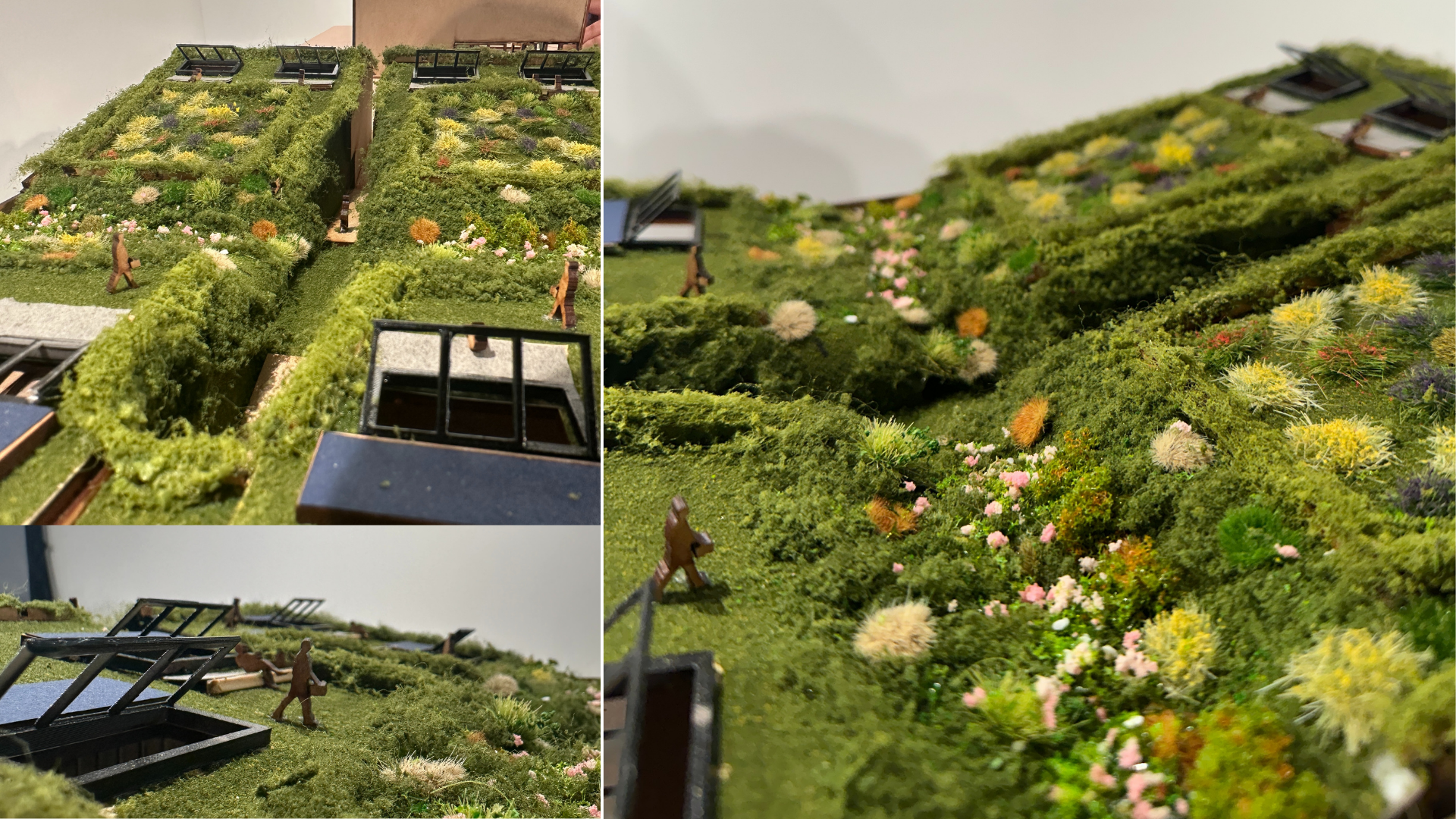
Final Presentation — Featured in LA Times
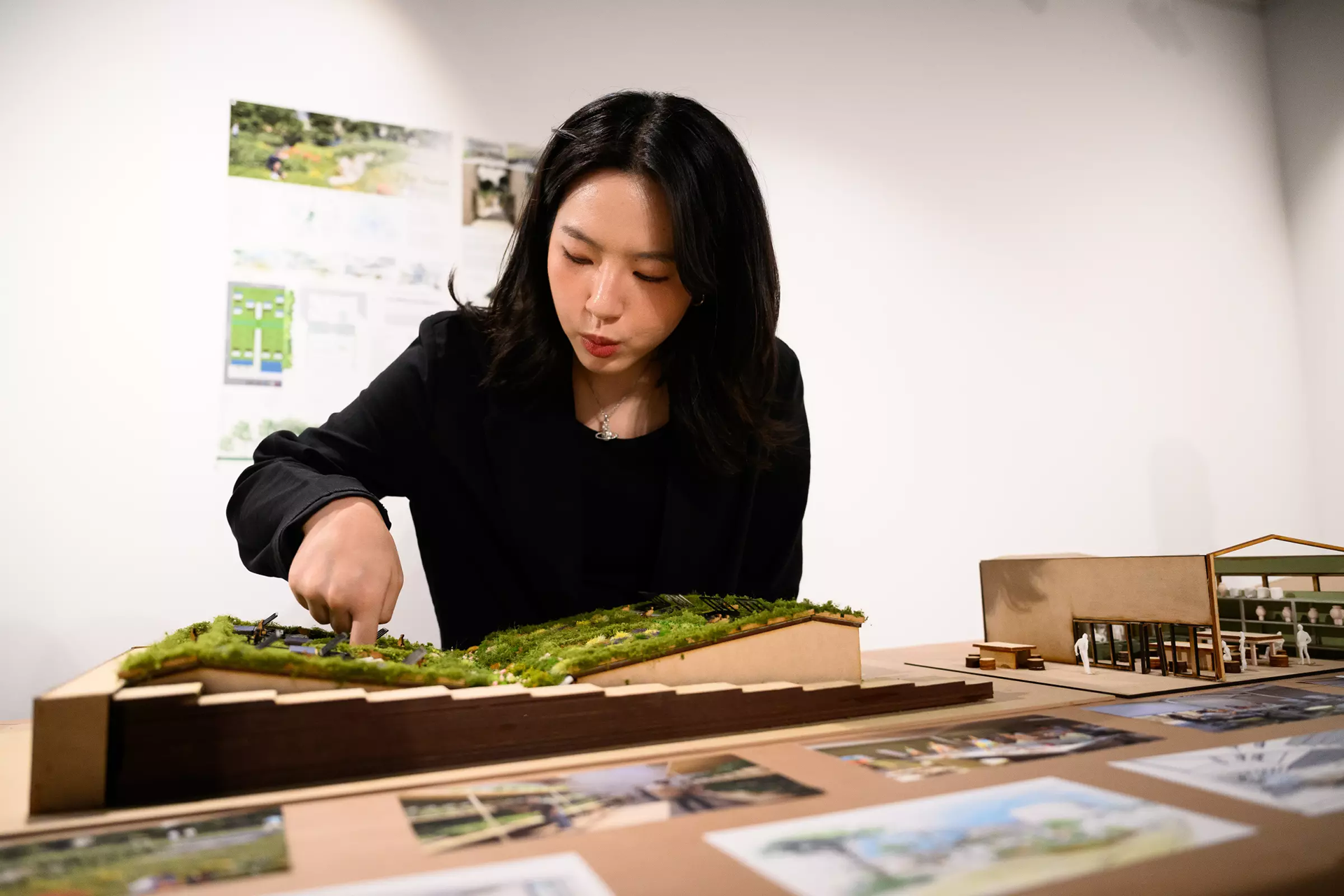
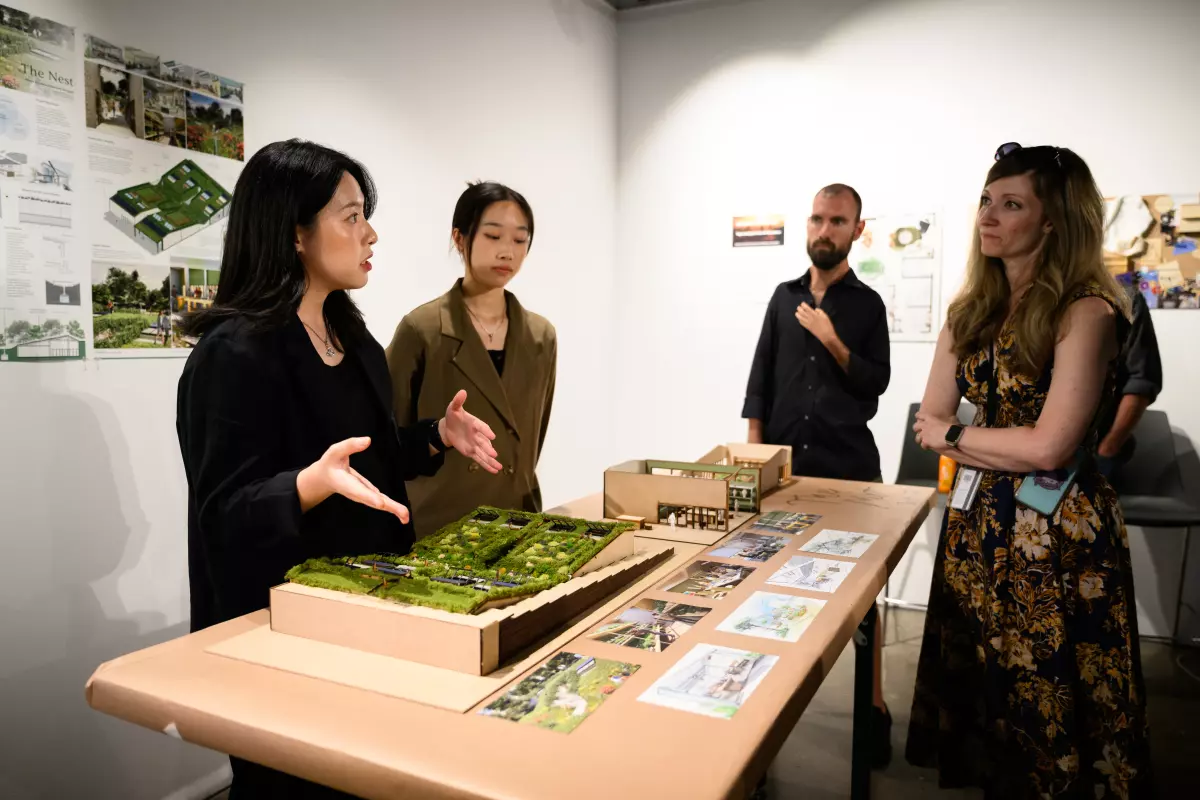
Through physical models and drawings, the project communicates a spatial response to wildfire recovery—centering the central garden as a place of refuge, connection, and renewal. These images were photographed by LA Times and featured in a Los Angeles Times article covering design responses to the Eaton Fire and its impact on Altadena.
Back to Top